When Do Termites Swarm in Southern California? Signs to Watch For
A cloud of winged insects near a window or porch light can be unsettling. In Southern California, it is often the first visible sign that termites are active on or near your property. Knowing when termites swarm, and how to tell them apart from flying ants, helps you act early instead of waiting for damage to show.
What a termite swarm is
A swarm is a mating flight. Mature termite colonies produce winged males and females, called swarmers or alates. They leave the colony, pair up, drop their wings and look for a place to start a new colony.
A swarm does not always mean the termites came from your house. But swarmers that appear indoors usually mean a colony is close, and often inside the structure.
When subterranean termites usually swarm
Subterranean termites usually swarm in spring. The flights often follow warm days that come after rain. If you see winged insects in March, April or May, soon after a wet spell and a warm afternoon, take it seriously.
These termites live in the soil and travel to wood through mud tubes. Swarmers may show up near doors, windows, foundation vents or crawl spaces.
When drywood termites usually swarm
Drywood termites more often swarm in late summer and fall. They live inside the wood they eat, such as framing, eaves, attic timbers and furniture, and they do not need contact with soil.
Swarmers often gather near light, so you may find them around windowsills, light fixtures and in attics or garages in the evening.
Swarmers or flying ants?
Termite swarmers and flying ants look alike at a glance. A closer look shows the difference:
- Waist: termites have a thick, straight body. Ants have a clearly pinched waist.
- Antennae: termite antennae are straight. Ant antennae are bent, like an elbow.
- Wings: termites have two pairs of wings that are about the same length. On ants, the front wings are longer than the back wings.
If you can catch one in a jar or on tape, it is easy to compare. If you are not sure, keep the sample and show it to a professional.
Other signs to look for
Swarmers are not the only clue. Check for these as well:
- Discarded wings. After a swarm, termites shed their wings. Small piles of matching wings on windowsills, in spider webs or near doors are a strong sign.
- Mud tubes. Subterranean termites build thin mud tunnels on foundation walls, piers and crawl space framing.
- Frass. Drywood termites push tiny, hard pellets out of the wood. They look like fine sand or coffee grounds and may collect in small piles under infested wood.
- Damaged wood. Wood that sounds hollow when tapped, or paint that bubbles or looks warped, can point to activity inside.
What to do if you see swarmers
Stay calm and do not spray them. A store-bought spray may kill the insects you can see, but it does nothing for the colony they came from. It can also make it harder for an inspector to find where the termites are active.
- Vacuum up the swarmers and any wings. Empty the vacuum outside.
- Save a few in a jar or on clear tape so they can be identified.
- Note where you found them and what time of day it was.
- Call for an inspection.
Inspections and treatment
A licensed inspector checks the attic, crawl space, eaves, garage, foundation and any exposed wood. The goal is to find out which kind of termite you have and how far the activity goes. That answer decides the plan.
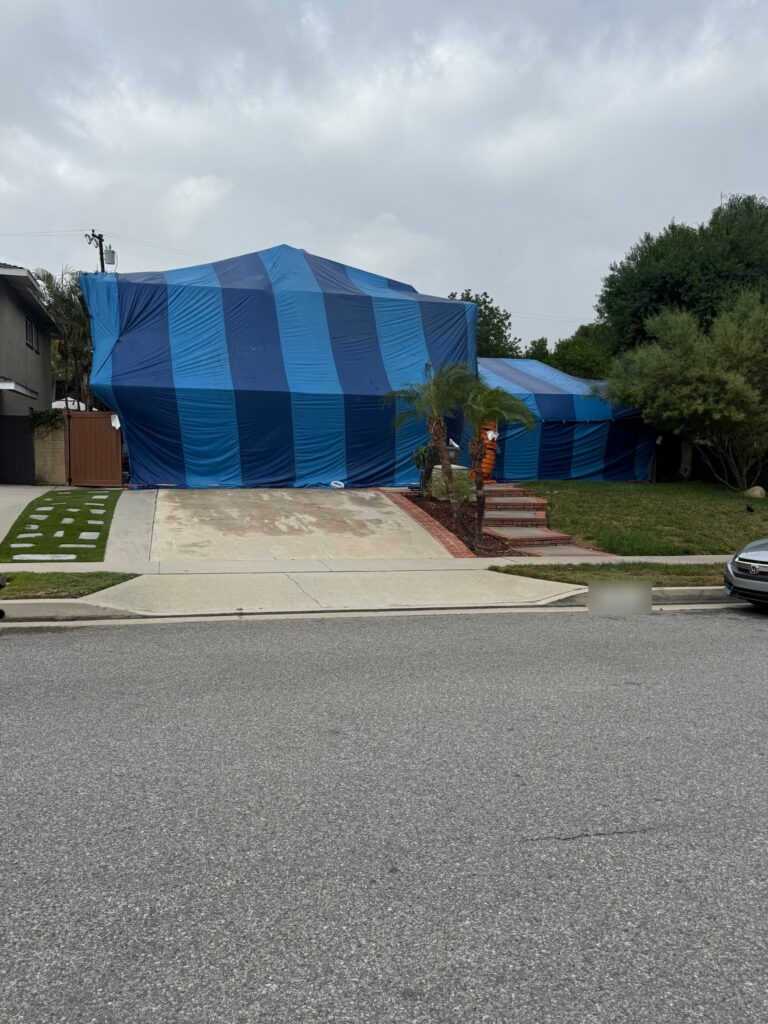
A professional termite inspection and treatment may use a local treatment for a small, contained area or a barrier treatment around the structure for subterranean termites. When drywood termites are spread through a building, whole-structure fumigation is a common option. The home is sealed under a tent, a fumigant reaches the wood throughout the structure, and the household and pets stay out until the home is cleared for re-entry.
For more background on how termites live and what they damage, read our termite guide.
Frequently Asked Questions
Are termite swarmers dangerous?
Swarmers do not bite or sting and they do not eat wood. The concern is what they signal: a mature colony nearby that may already be feeding on the structure.
If I only saw a few swarmers, do I still need an inspection?
Yes. A few swarmers inside the home, or a pile of discarded wings, is worth checking even if the numbers are small. An inspection is the only reliable way to know whether there is active infestation.
Can I treat termites myself?
Over-the-counter products rarely reach the whole colony, and they can hide the signs an inspector looks for. Termites are usually hidden in walls, soil and framing, so a professional inspection gives you a clear picture before you decide what to do.